Coral Reefs Pass the Point of No Return: Planet Enters a New Phase of Climate Collapse
A global report by 160 scientists warns that the planet is exceeding its ecological limits. Coral reefs have already collapsed, and other ecosystems could follow in the coming years.
Catarina Solano de Almeida
2:45 PM, October 13, 2025
The world is on the threshold of a “new reality” under the influence of climate change. According to an international study published Monday, coral reefs have almost certainly passed a catastrophic tipping point, with ripple effects for millions of people and ecosystems.
The Global Tipping Points Report, prepared by a team of 160 scientists from 87 institutions and 23 countries, analyzes the key “tipping points” that could push the planet toward irreversible change. When crossed, these thresholds could trigger a domino effect of environmental disasters.
“Unfortunately, we are now almost certain that we have passed one of these tipping points for tropical coral reefs,” lead author Tim Lenton, an environmental scientist at the University of Exeter, told AFP.
Coral Reefs in Collapse
With warming of +1.4°C compared to the pre-industrial era, reefs “are experiencing unprecedented decline,” affecting hundreds of millions of people who depend on them and threatening a million marine species.
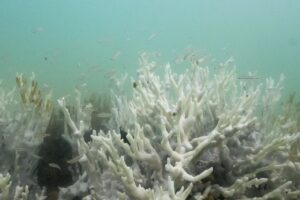
Corals, which act as natural barriers against erosion and are reservoirs of biodiversity, are turning white due to the heat. This bleaching event results in the expulsion of the microorganisms that give them color and food, and without them, the corals eventually starve.
When they die, they leave behind only skeletons that degrade over time. Since 2023, scientists have recorded “unprecedented” mortality in a bleaching episode that has already lasted two years.
The “Danger Zone”
With global warming approaching +1.5°C compared to the pre-industrial era, the vast majority of reefs are doomed. This limit, according to researchers, could be exceeded within a few years if greenhouse gas emissions are not drastically reduced.
This figure is precisely the most ambitious limit of the Paris Agreement (2015), which UN Secretary-General António Guterres considers “on the brink of collapse.”
Exceeding it would put “the world in an even greater danger zone,” warns Tim Lenton.
Earth at risk: “Climate crisis has entered an unpredictable and dangerous phase”